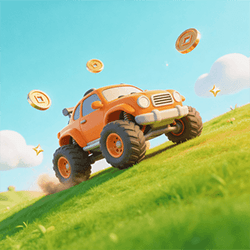
Road Killer
Description
Road Killer About This Game Road Killer is a casual hill-climb physics driving game about keeping a car moving across rough roads, slopes, bumps, ramps, and obstacle-heavy terrain. Many failed runs happen because the car reaches a hill crest too fast and lands at a poor angle, not because the player simply lacks speed. Each run follows a clear driving loop: move forward, collect coins, watch the fuel gauge, survive uneven road sections, and use upgrades to improve the next attempt. The fun comes from learning how the car reacts when it climbs, drops, catches air, or lands on an awkward slope. Road Killer rewards patience more than constant acceleration. A clean run with steady throttle control is usually better than a reckless run that ends after one oversized jump. The road constantly asks small questions: do you need more power before the hill, less throttle before the drop, a safer landing line, or a smarter upgrade choice? Coins, fuel, and upgrades give the game its progression rhythm. Coins support upgrades, fuel keeps the run alive, and upgrades help the car handle longer and rougher sections. The strongest beginner mindset is simple: control first, distance second, collection third. This Road Killer guide focuses on practical driving rhythm, hill-climb balance, fuel awareness, upgrade decisions, and common failure patterns that new players run into during early runs. How to Play Start a Road Killer run by watching the first stretch of road instead of flooring the throttle immediately. The opening terrain matters. A flat start gives you room to build momentum, while an early hill or quick bump requires tighter control from the first second. Use throttle control to move forward without throwing the car off balance. Full throttle helps before certain climbs, but holding it too long can launch the car over a hill crest and make the landing harder to recover. The goal is to keep enough speed to progress while maintaining the car’s center of gravity. The brake is useful for more than stopping. Use it to settle the car before a sharp downhill, reduce speed before a bump, or correct a landing that feels too fast. In hill-climb driving games, the brake often works like a balance tool, not just a slowdown button. Fuel management affects every run. Watch the fuel gauge during long climbs and heavy throttle sections, because aggressive driving burns through distance quickly. Plan for fuel pickups early rather than reacting at the last moment. Coins are worth collecting when they fit the driving line. A coin path across flat or stable ground is easy value. A coin placed near a steep drop, awkward ramp, or unstable landing needs a quick risk check. Crashing for one coin usually costs more progress than leaving it behind. Upgrades improve the car’s performance over time. Road Killer progression is strongest when upgrades support the problem you are actually facing: climbing power, vehicle control, grip, fuel support, or similar performance areas shown in the game. Upgrade names may vary by version, so focus on what each upgrade improves: climbing power, stability, grip, or fuel support. A good run follows this pattern: build speed before a hill, ease off near the crest, keep the car level while catching air, land with control, collect safe coins, watch fuel, then upgrade based on the reason the run ended. Road Section · Better Action · Mistake to Avoid Before a hill · Build momentum before the slope · Accelerating too late Hill crest · Ease off before the top · Flying over at full speed Downhill · Control angle and speed · Letting gravity take over Jump or ramp · Prepare for landing · Chasing distance only Coin route · Take safe pickups first · Crashing for one coin Low fuel · Plan early for fuel · Ignoring fuel until the car is nearly empty Beginner Strategy Guide The most important beginner habit in Road Killer is learning the car’s weight. Do not treat the first few runs as serious distance attempts. Use them to feel how quickly the car accelerates, how easily it tilts, and how it lands after catching air. Once you understand the car’s rhythm, every later run becomes easier to control. Avoid full throttle before the first hill crest. A fast launch can feel useful, but it often puts the car into the first slope at a bad angle. Start with steady acceleration, then increase power only when the road ahead needs it. Before a hill, build momentum early. Many new players press harder only after the car has already slowed down on the slope. That is too late. Enter the climb with enough speed, keep the car stable, and reduce throttle slightly before the top so the car does not fly over the crest nose-first. Hill crests are one of the easiest places to flip. The danger is not the climb itself; it is what happens after the car reaches the top. Too much throttle at the crest can launch the car into a blind landing, especially when the next section drops sharply. Ease off before the top and prepare for the road on the other side. Downhill sections require discipline. Gravity already gives the car speed, so extra throttle can turn a safe descent into a rollover. Let the car settle, keep the front from dipping too hard, and use the brake lightly when the car starts outrunning your ability to control it. When the car catches air, stop thinking about distance and start thinking about the landing. The safest landing is not always the longest jump. Try to keep the car level, then match the landing angle to the road below. A clean landing keeps the run alive; a dramatic jump with a bad landing ends progress quickly. Upgrade choices should match failure patterns. New players often buy power too early because a faster car feels stronger. That can make the game harder. More speed means bigger jumps, sharper landings, and less time to react. Early upgrades should support control before raw speed becomes the priority. A strong beginner upgrade path is to improve control and shock absorption first, then add Engine / Power once the car can handle harder road sections. Suspension upgrades help absorb bumps and rough landings. Tires or grip upgrades help the car stay connected to the road. Fuel Capacity becomes more useful when your runs are stable but end before you can push farther. If Your Run Ends Because... · Upgrade Priority The car cannot climb steep hills · Engine / Power The car flips after bumps or ramps · Suspension or control The car slides or loses contact with the road · Tires or traction The run ends while the driving line is still stable · Fuel Capacity The car becomes too fast to control · Stop over-investing in speed Coins should never control the entire run. Take coins along the natural route, but do not force the car into unstable terrain for a single pickup. A safe run that travels farther gives you more chances to collect later. A short run that ends from one greedy coin route teaches very little. Fuel often becomes the hidden limiter for beginners. A player may think the problem is distance or speed, but the real issue is burning too much fuel during long climbs or rough sections. Smooth driving helps fuel last longer because you waste less time fighting bad angles. After each failed attempt, review the cause before restarting. Road Killer becomes easier when you name the mistake clearly. Did you hit the hill too slowly? Did you stay on throttle over the crest? Did you land nose-first? Did you ignore fuel? Did you upgrade speed before control? Fix one issue at a time instead of repeating the same drive. The best beginner goal is not a perfect run. It is a cleaner run than the last one. Travel farther, flip less often, land more smoothly, and upgrade with a reason. Common Mistakes Full throttle before the first hill crest This makes the car harder to control before you understand the road. Start steady, then add speed when the terrain calls for it. Accelerating too late on a hill A car that reaches the slope without momentum can lose speed quickly. Build power before the climb begins instead of reacting halfway up. Flying over a hill crest at full speed The crest is where many runs fall apart. Ease off near the top so the car does not launch into the next section at a bad angle. Over-accelerating during a long downhill Downhill speed builds naturally. Extra throttle can push the car into a flip or make the next obstacle harder to avoid. Landing nose-first after a ramp Catching air is useful only when the landing is controlled. Keep the car level and avoid forcing extra distance at the cost of stability. Buying speed before the car can handle rough landings A faster car is not always a better car. Control, suspension, grip, and fuel support often matter more during early progression. Chasing coins near unstable terrain Coins near dangerous slopes, jumps, or broken rhythm should be treated carefully. A safe route is better than a risky pickup that ends the run. Forgetting fuel during long climbs Heavy throttle burns through a run quickly. Watch fuel before it becomes an emergency, especially during extended uphill sections. Repeating the same failed approach Crashing in the same place means the driving rhythm needs to change. Try less throttle at the crest, a slower downhill entry, or a different upgrade focus. FAQ What is Road Killer? Road Killer is a casual hill-climb physics driving game where you control a car across uneven roads, slopes, bumps, ramps, and obstacles. The main challenge is keeping the car balanced while driving farther and improving through upgrades. How do you play Road Killer? Drive forward with careful throttle control, use the brake to manage speed and balance, collect coins when the route is safe, watch the fuel gauge, and upgrade the car after runs to improve future attempts. Is Road Killer a hill-climb driving game? Yes. Road Killer fits hill-climb driving gameplay because it focuses on slopes, vehicle balance, fuel awareness, rough terrain, jumps, landings, and distance-based progression. How do beginners avoid flipping? Beginners should avoid full throttle over hill crests, slow down before steep downhill sections, keep the car level while catching air, and land smoothly instead of chasing maximum jump distance. What should I upgrade first? Start with upgrades that improve control, grip, suspension, or fuel stability. Engine / Power upgrades help with climbs, but too much speed too early can make the car harder to handle. Are coins, upgrades, and rewards real-world prizes? No. Coins, upgrades, rewards, vehicles, and distance scores are virtual gameplay elements only. Road Killer is a casual arcade driving game, not a real-money reward or gambling product. *Editorial note: This guide is based on visible gameplay mechanics and beginner-facing driving patterns. It focuses on practical control, upgrade decisions, and common mistakes rather than hidden formulas, fixed reward values, or guaranteed outcomes.