Jigsaw puzzle
Description
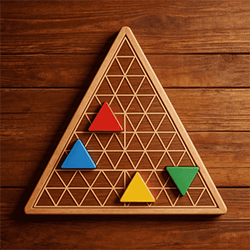
Jigsaw Puzzle About This Game Jigsaw Puzzle is a casual shape-fitting puzzle game where you use triangle-based blocks to fill a blank outline. Instead of matching picture fragments like a traditional photo jigsaw, the challenge is about focusing on corners, edges, and how each piece changes the remaining space. Each level gives you a fixed set of pieces below the outline. Your task is to drag them into the empty shape until the entire area is filled. A strong placement should align with the outline border, avoid overlap, and avoid leaving a single-triangle gap that no remaining piece can cover. The game is simple to start, but it rewards careful planning. If you place pieces too quickly, the remaining space may become awkward or impossible to finish. The best approach is to study the outline first, identify the most restrictive areas, and build the solution step by step. How to Play 1. Look at the full outline before placing any piece. 2. Check the outline corners and long edges before moving the first piece. 3. Drag a triangle-based piece from the bottom area into the outline. 4. Place each piece so it stays inside the border and does not overlap other pieces. 5. Continue placing pieces until the full outline is filled. 6. Use every available piece to complete the level. 7. If your layout no longer works, use Reset to clear the board and try a better arrangement. 8. If you are stuck, Tips can help, but it costs 100 in-game diamonds. Diamonds are virtual game resources shown inside the game. Beginner Strategy Guide Start With the Most Restrictive Corners When to use it: At the beginning of every level. Why it works: Sharp corners and narrow angles usually accept fewer pieces than open center areas. What it prevents: It helps prevent awkward leftover spaces that no remaining piece can fill. Look for pointed corners, tight edges, and unusual outline angles first. If a piece has a matching sharp corner or long slanted side, test it there before filling the middle. Corners act like anchors because they limit how many shapes can fit cleanly. Match Long Edges Before Filling the Center When to use it: After you identify the obvious corner pieces. Why it works: Long border sections are easier to judge while the board is still open. What it prevents: It stops you from building a center layout that blocks the correct edge pieces later. A piece with a long straight side often belongs near the outside border. If you save it too long, the remaining outline may become too fragmented, and the piece may no longer have a clean place to fit. Test Large or Awkward Pieces Early When to use it: When one piece is much larger, wider, or harder to place than the others. Why it works: Large pieces need more space and fewer restrictions. What it prevents: It reduces the chance of ending with a big piece that cannot fit anywhere. Do not always save large pieces for last. If a block has an unusual shape, test it near the outline while there is still room to adjust. Once the center is crowded, large pieces become much harder to place. Use Small Pieces to Finish, Not to Start When to use it: After the main border and large spaces are mostly solved. Why it works: Small pieces are flexible and can close gaps more easily. What it prevents: It avoids wasting small pieces in open areas where larger pieces should go. Small triangle groups are useful near the end because they can fill tight spaces. If you use them too early, you may leave behind odd spaces that only those small pieces could have solved. Reset When the Remaining Space Looks Wrong When to use it: When the leftover area no longer matches any unused piece. Why it works: Reset is faster than forcing a layout that cannot be completed. What it prevents: It stops you from spending too long on a broken arrangement. A good sign that you should restart is a tiny triangle gap, a thin strip, or a leftover shape that clearly does not match any piece below. When that happens, the problem is usually an earlier placement, not the final piece. Best Solving Order 1. Find the sharpest corners first. 2. Match long-edge pieces to the outer border. 3. Test large or awkward blocks before the center becomes too fragmented. 4. Use smaller pieces to close remaining spaces. 5. Reset when the leftover space no longer matches any unused piece. This order keeps the most restrictive decisions early and leaves the flexible pieces for the end. Ready to test your spatial skills? Scroll up to the game board and start placing your first corner piece! Common Mistakes 1. Treating It Like a Photo Jigsaw Jigsaw Puzzle is not mainly about matching images. The important clues are shape, border alignment, angles, and how the remaining pieces can fill the outline. 2. Dragging Before Reading the Outline Placing the first piece too quickly can create problems later. Check the corners, long edges, and narrow spaces before making your first move. 3. Starting From the Center Too Early The center gives you more freedom, but that freedom can be misleading. If you fill the middle first, you may block pieces that needed to connect with the outer border. 4. Leaving Awkward Tiny Gaps A single-triangle gap or thin leftover space can break the whole layout. Before placing a piece, look at the shape it leaves behind, not just the space it covers. 5. Saving Large Pieces Too Late Large or unusual pieces need open space. If you wait too long, the board may become too crowded for them to fit naturally. 6. Using Tips Before Testing Obvious Edge Pieces Tips are more useful after you have checked the clear corners and border pieces yourself. If several obvious edge matches remain untested, try those before spending a hint. FAQ Is Jigsaw Puzzle a traditional photo jigsaw game? No. This game focuses on fitting triangle-based pieces into a blank outline. The challenge is shape placement, not rebuilding a picture. What should I place first in Jigsaw Puzzle? Start with the sharpest corners or the pieces that clearly match the outer border. These areas are more restrictive than the center, so solving them early gives you a stronger layout. When should I use Reset? Use Reset when the remaining empty space no longer matches any unused piece. This usually means an earlier piece is in the wrong position, so restarting the layout is faster than forcing the final moves. When is Tips worth using? Use Tips only after you have checked the corners, long edges, and large pieces carefully. It works better as a final nudge than as your first solving method. Is Jigsaw Puzzle a gambling game? No. Jigsaw Puzzle is a shape-fitting puzzle game based on piece placement and outline completion. It does not require betting, wagering, or real-money gambling decisions. Editorial Note This triangle block strategy guide was compiled for players using the visible gameplay mechanics of Jigsaw Puzzle, including outline filling, triangle-based pieces, Reset, Tips, and the 100-diamond Tip system. We regularly review our guides for clarity and accuracy, but this is an independent gameplay resource and not an official developer manual.